In a quiet corner office above the hangar, the chief pilot of a corporate flight department scrolled through his phone, re-reading a message from an executive assistant. It was short, hurried, and painfully familiar:
“We need to get the team to Chicago Thursday morning. Not sure on headcount yet. Will confirm.”
There was no departure time. No return schedule. No passenger manifest. No clarity about whether this was a two person trip or a full leadership meeting. Yet the clock had already begun ticking. Crew rest windows needed to be considered, aircraft positioning evaluated, and weather reviewed. But without the missing details, planning could not fully begin.
This is the quiet tension that lives inside many Part 91 flight departments—an environment defined by professionalism and precision, yet constantly challenged by the informal way trips are often requested.
The Human Reality Behind Part 91 Operations
Corporate flight departments are among the most polished corners of private aviation. They manage a single owner or a small group of executives. They operate like a boutique airline, but with deeper understanding of each traveler’s needs. They bring consistency, safety, and discretion to a level unmatched by any other segment.
Yet even in these refined environments, the request process can feel surprisingly improvised.
Executives, accustomed to rapid movement and flexible schedules, often communicate travel needs with shorthand messages. Assistants relay details as soon as they have them—which is often not very much. Travel plans shift by the hour, and new decisions emerge without warning.
The flight department absorbs this volatility with grace, but the lack of structured intake quietly erodes efficiency.
When Informality Meets Operational Precision
Private aviation looks effortless from the cabin. But behind that effortless experience lies an intricate lattice of timing, logistics, and coordination. Every trip impacts:
- crew duty and rest limitations
- maintenance schedules
- hangar availability
- fuel planning
- FBO arrangements
- international requirements
Even a small omission in an early request—an incorrect airport, a missing passenger count, a vague departure timeframe—can ripple across the planning landscape.
In Part 91 operations, where trips are often planned on short notice and tailored to specific individuals, clarity is not a luxury. It is a necessity.
The Value of Quiet Structure
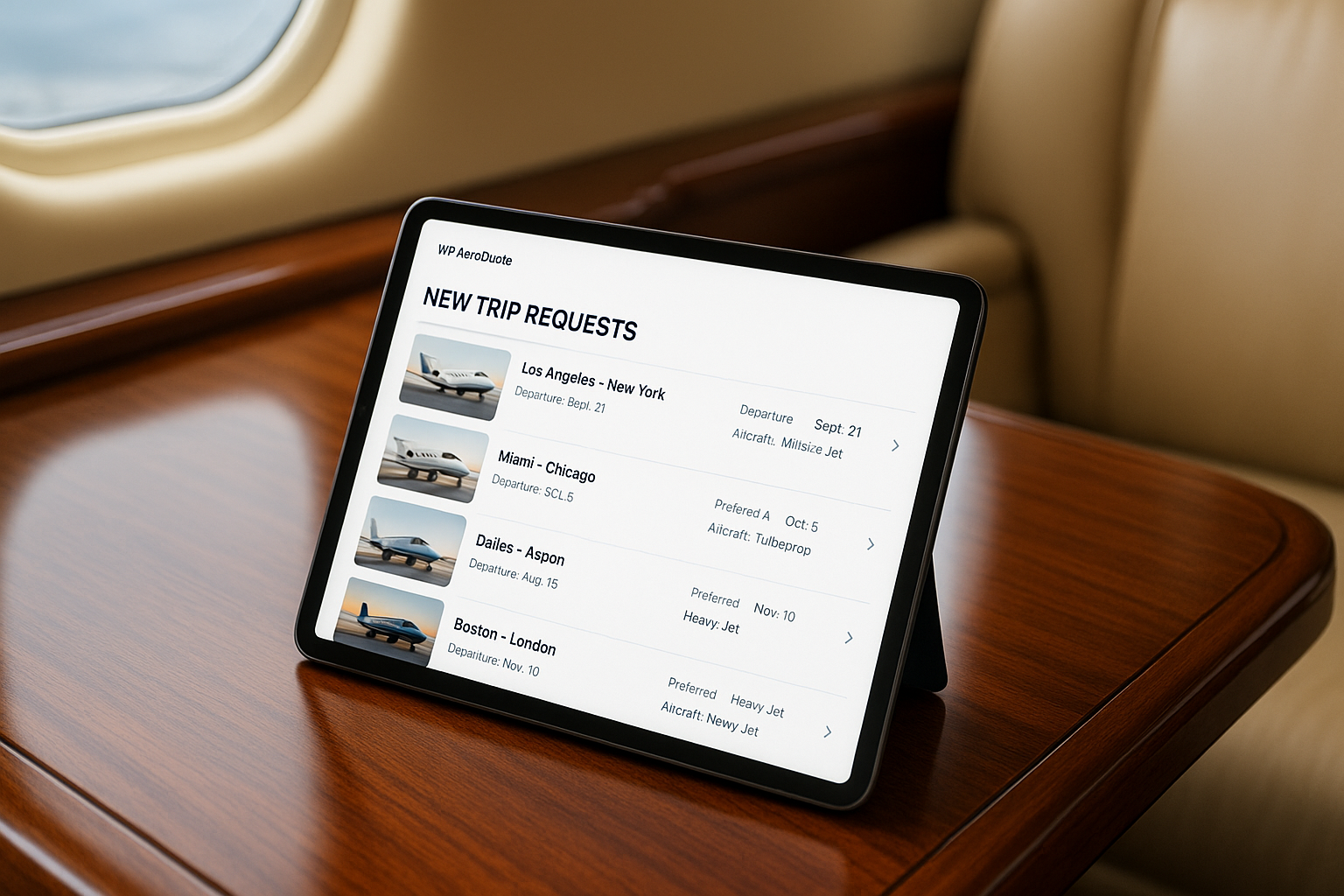
Imagine the same chief pilot receiving the Chicago request, but through a private internal portal designed specifically for the flight department. A portal where the executive or assistant selects:
- departure airport
- destination
- date and approximate time
- known passengers
- return requirements
- special considerations
The request arrives cleanly. There is no interpreting intent. No guessing headcount. No waiting for additional details before preliminary planning can begin.
The portal does not replace the personal communication that defines Part 91 service. It simply introduces a layer of elegance to the process—one that supports clarity without imposing rigidity.
Internal Technology as a Form of Hospitality
Executives move quickly. Their world is shaped by immediacy, and their tools mirror that pace. A private itinerary portal gives them a familiar environment:
- a clean input field instead of a long email thread
- a guided flow that gently prompts for essential details
- a sense of forward movement the moment they submit
For them, it feels like accommodation.
For the flight department, it feels like relief.
This alignment—where both sides experience ease for different reasons—is the hallmark of luxury operational design.
The Shift From Reactive to Refined
One chief pilot described it best after integrating a more structured intake process:
“We didn’t realize how much energy we were spending on clarifying requests until the clarifying wasn’t needed anymore.”
That energy became available for higher value tasks: refining trip logistics, anticipating preferences, coordinating with ground transportation, and improving internal communication with the executive team.
The department became more proactive. More confident. More in control.
And executives noticed—not because anyone mentioned the system, but because the experience simply felt smoother.
The Portal as a Reflection of Professionalism
Part 91 departments pride themselves on excellence. The aircraft are immaculate. Crews are polished. Every detail is accounted for. Yet the request process often remains the last informal component in an otherwise meticulously crafted environment.
Introducing an internal itinerary portal bridges that gap. It transforms the first step of each trip into a moment that reflects the quality of everything that follows.
Quiet structure. Unspoken clarity. A sense of readiness that elevates both perception and performance.
In the end, the portal is not about technology. It is about dignity—about giving both the department and the executives a more graceful way to begin the journey.
Get Started
If you want your website to capture the clients who are already looking for you, install WP AeroQuote and transform your digital presence into the elegant, effortless experience modern travelers expect. For custom aviation workflow design or luxury level digital upgrades, contact us and we will create a solution tailored to your brokerage.