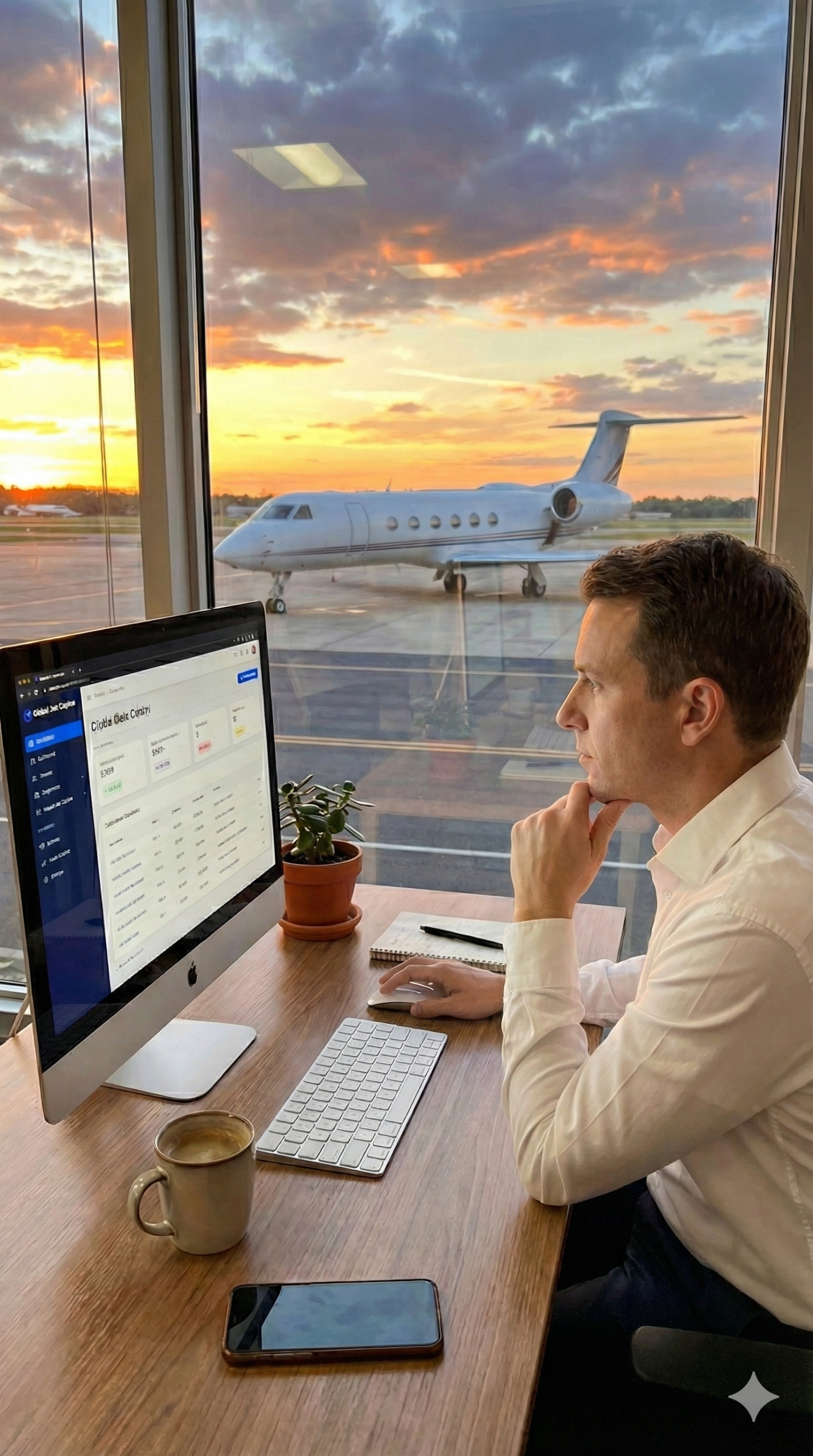
Late one evening in a quiet hangar office, a broker stared at his inbox with a familiar mix of exhaustion and pride. Three clients had texted him throughout the day, each wanting something slightly different. A family flying to Scottsdale. A last minute corporate hop to White Plains. A repeat client asking about a super midsize option for a retreat in Napa.
He handled every request personally, as he always had. He remembered their preferences, anticipated their routines, and responded with the warmth and polish that earned him their loyalty.
But as he looked at the growing list of unopened emails—some vague, some incomplete, some already hours old—he wondered how long he could continue managing it all with pure effort alone.
That question has become a quiet ache across the brokerage world. Brokers pride themselves on service, not software. On human intuition, not automation. On relationships built over years, not processes built on screens. Yet the industry’s pace has quickened, and the digital expectations of clients have risen.
The real challenge facing modern brokers is not whether they can deliver exceptional personal service. The challenge is whether they can maintain that personal service while managing the increasing volume and speed of inquiries.
The Myth That Automation Replaces Connection
Many brokers fear that introducing automation will dilute their personal brand—that clients choose them precisely because they are hands-on, always reachable, always attentive. They worry that anything automated will make them seem less engaged or less committed.
Yet this fear is rooted in an outdated picture of what automation means.
Automation does not replace the broker. It removes the clutter around the broker.
It handles the repetitive steps that consume time and create inconsistency. It protects the broker’s energy, not their ego. And in private aviation, where trust and relationships are the currency of longevity, this distinction matters deeply.
Luxury Service Has Always Been Supported by Invisible Systems
Think of the finest hotels in the world. The experience feels effortless, but behind the curtain exists an orchestra of coordinated processes. Guest preferences stored. Arrival times tracked. Room temperatures set. Flowers ordered. Cars arranged.
Guests never see the machinery that enables the magic. They only feel the magic.
The most successful brokers operate the same way. Their clients experience a seamless, thoughtful, anticipatory interaction. But behind the scenes, there must be a system that catches each detail before it falls, organizes it before it becomes chaotic, and presents it in a way that allows the broker to respond swiftly and personally.
Without structure, personal service becomes reactive. With structure, personal service becomes elevated.
The Emotional Importance of the First Impression
When a potential client reaches out—whether through a website, an assistant, or a late-night curiosity—there is a delicate window in which their perception forms. If the intake process feels unclear or disjointed, they begin to question the broker’s ability to navigate the more complex stages of a charter.
They may not say it aloud, but they sense it:
“If beginning the conversation feels difficult, will the rest of the experience feel the same?”
A smooth, organized intake creates emotional confidence. It signals that the broker operates with refinement. And it gives the broker room to step in with genuine human engagement, unburdened by the scramble of trying to interpret fragmented requests.
Preserving the Signature Touch of a Broker
The heart of brokerage will always be human. It lives in remembering the champagne a client prefers after closing a major deal. It lives in understanding why a CEO always asks for a specific tail number. It lives in knowing that a family traveling to Vail has a child who loves sitting by the window.
No tool replicates that. And none should try.
But those touches shine brightest when the noise around them is removed. When the process of receiving inquiries is structured. When details are clear. When the broker’s time is spent on the part only a person can deliver: the relationship.
The Brokers Who Thrive Are the Ones Who Evolve
The modern charter landscape rewards brokers who balance high touch service with quiet, intelligent systems that support them. These brokers are not replaced by automation—they are amplified by it.
They respond faster because the information arrives cleaner.
They speak with clarity because they are not piecing together scattered details.
They build stronger relationships because they have margin to focus on the human element, not the administrative one.
In luxury aviation, where precision is emotional as much as operational, this balance is what separates the merely capable from the truly exceptional.
The Future of Brokerage Is Graceful Efficiency
The hesitation many brokers feel toward automation is understandable. Their identity is built on personal connection. But the future of the industry belongs to those who realize that structure does not weaken connection—it protects it.
When the intake process hums smoothly beneath the surface, the broker becomes free to be what clients value most: a calm, attentive, highly informed guide through the world of private travel.
And in the end, that is the personal touch clients remember—not how the inquiry arrived, but how beautifully the broker carried the experience from that moment forward.
Get Started
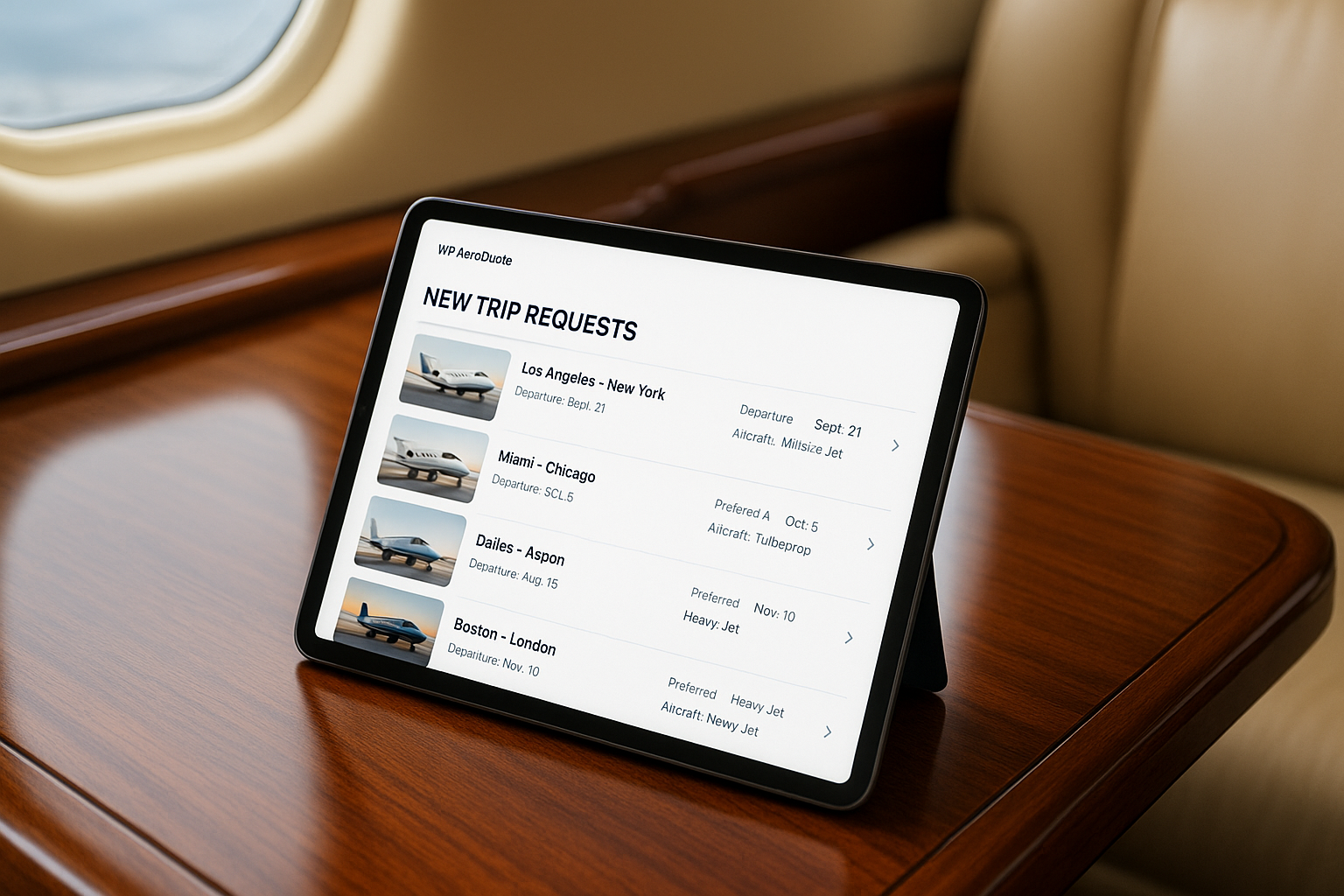
If you want your website to capture the clients who are already looking for you, install WP AeroQuote and transform your digital presence into the elegant, effortless experience modern travelers expect. For custom aviation workflow design or luxury level digital upgrades, contact us and we will create a solution tailored to your brokerage.