In a glass walled dispatch room just outside Denver, a Part 135 operations team moved through the familiar choreography of a busy afternoon. A crew duty timer blinked on one screen. Weather advisories flashed across another. A phone rang with a maintenance question about a tire inspection. Then, layered among the noise, an email arrived with the subject line “Quote Request.”
The dispatcher opened it, expecting clarity. Instead, the message was a vague paragraph from a traveler who wanted “a jet from the New York area to somewhere in Florida,” sometime next week, for “maybe three or four passengers.” It lacked dates, airports, timing, preferences—everything required to determine feasibility.
The dispatcher exhaled, knowing what came next: the back and forth, the clarifying questions, the delays that add quiet friction to a system built on precision.
Across the industry, this scene plays out in countless forms. Operators are masters of logistics, yet much of their time is spent trying to decode incomplete inquiries that come in through unstructured channels. It is not that clients are careless—they simply do not understand what information is critical, or how missing details ripple through an operation that must remain flawlessly synchronized.
And this disconnect has become one of the least discussed constraints on operator efficiency.
The Space Between Interest and Action
Part 135 operations thrive on clarity. Crews are scheduled based on duty limits. Aircraft are positioned based on performance and weather. Maintenance windows are coordinated with tight precision. Even small uncertainties can cascade into larger complications.
But the quote intake process—the very beginning of the charter experience—often begins with ambiguity. A client expresses interest. The operator responds. Details emerge slowly, like a photograph developing in water. Only after several exchanges does the true picture come into view.
This slow reveal may seem harmless, but in an operational environment defined by rhythm and timing, it chips away at efficiency. It consumes attention. It delays quoting. It complicates planning. And it creates subtle stress in a role already shaped by constant decision making.
Where Luxury Expectations Meet Operational Realities
Travelers today expect convenience that feels effortless. They want their interest acknowledged instantly, even if the actual quote takes time. But this ease needs to be balanced with the structure operators rely on to ensure safety and feasibility.
It is in this intersection—where luxury expectations meet operational discipline—that many operators experience avoidable friction.
Clients want simplicity. Operators need precision.
The solution is not stricter rules for clients.
The solution is giving clients an elegant way to provide operators the clarity they require.
When Structure Becomes an Invisible Luxury
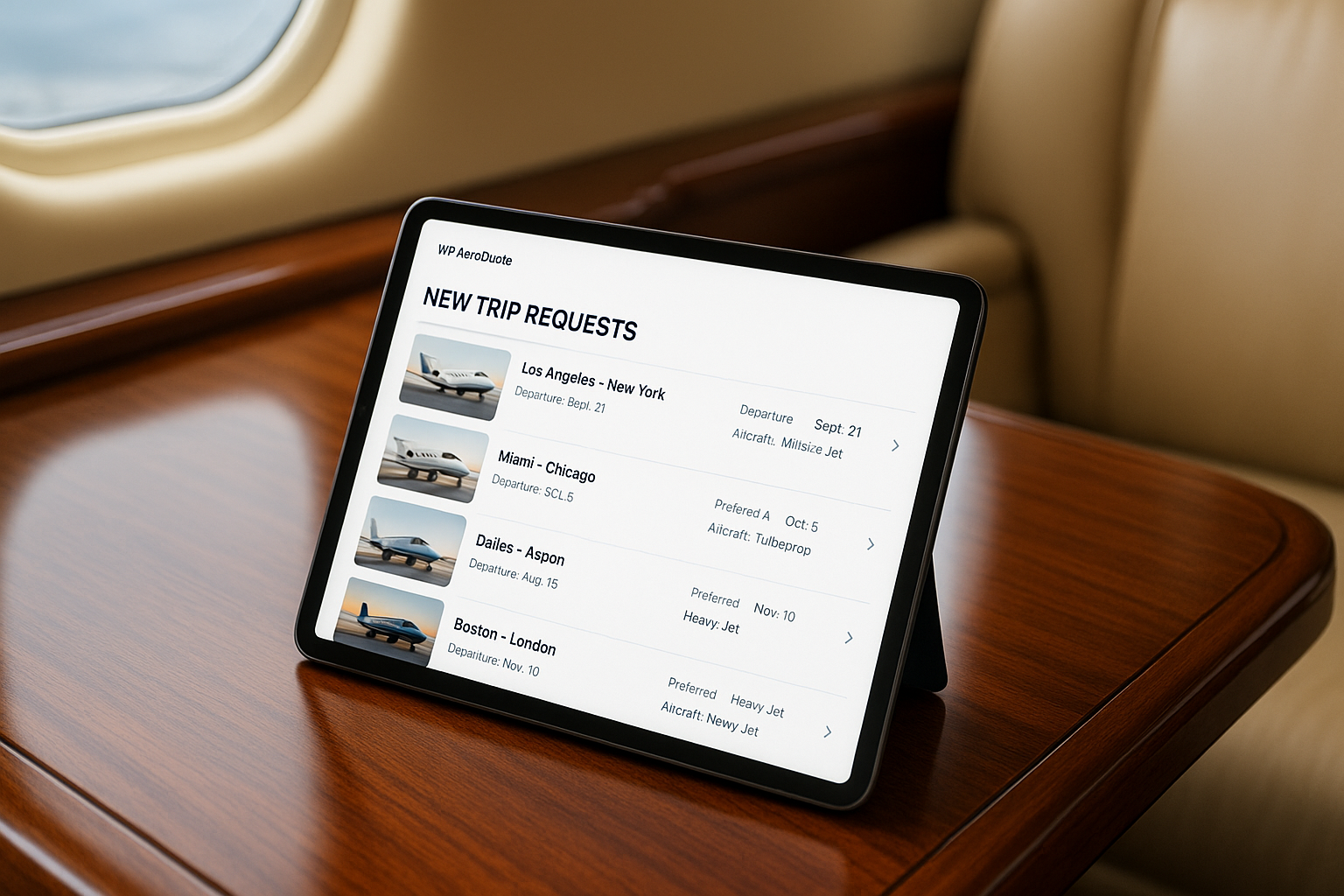
Imagine a scenario where every inquiry arrives in a clean format containing the essential details: departure airport, destination airport, date, time flexibility, passenger count, and aircraft category preference. Not a rigid form that feels transactional, but a smooth, intuitive pathway for the client to begin the process.
The operations team opens each request and immediately knows whether the flight is possible, which crews might be available, how the aircraft rotation may shift, and whether maintenance schedules would be impacted.
Suddenly, quoting becomes faster. Communication becomes clearer. Workload becomes lighter.
In luxury aviation, structure is not the opposite of elegance. Structure is the foundation that makes elegance possible.
The Hidden Cost of Unstructured Intake
When intake is inconsistent, several operational challenges emerge:
- Delayed quoting because essential information is missing.
- Inefficient communication loops that pull dispatchers away from higher priority tasks.
- Misalignment between sales and operations when early details are interpreted differently.
- Stress on duty-limited crew schedules due to unclear timing assumptions.
- Reduced conversion rates because slow momentum erodes emotional confidence for the client.
None of these issues stem from a lack of skill or dedication. They stem from the simple reality that operators are receiving information in a form not optimized for the environment they work in.
The Emotional Intelligence of Operational Design
In private aviation, efficiency is not just technical—it is emotional. When a dispatcher can move smoothly through quote intake, the entire tone of their day shifts. Decisions feel easier. Communication feels clearer. The operation hums with quiet confidence.
The operator benefits, the team benefits, and the client benefits.
And the elegance of the experience becomes noticeable, even though the client may never understand why the process felt so polished.
The Future of Operational Intake
The most forward-thinking operators are beginning to recognize that the quoting process is not merely a sales function. It is an operational gateway. The quality of the information entering the system shapes the quality of every decision made afterward.
It does not require a custom software suite. It does not require complex integrations. What it requires is a refined, intuitive way for clients to provide the information operators need—without making the process feel cumbersome.
When intake becomes structured without feeling rigid, operators unlock a kind of efficiency that improves everything downstream: quoting speed, crew planning, aircraft utilization, and the overall pace of operations.
And in an industry where timing, clarity, and confidence define the client experience, that shift becomes its own form of luxury.
Get Started
If you want your website to capture the clients who are already looking for you, install WP AeroQuote and transform your digital presence into the elegant, effortless experience modern travelers expect. For custom aviation workflow design or luxury level digital upgrades, contact us and we will create a solution tailored to your brokerage.